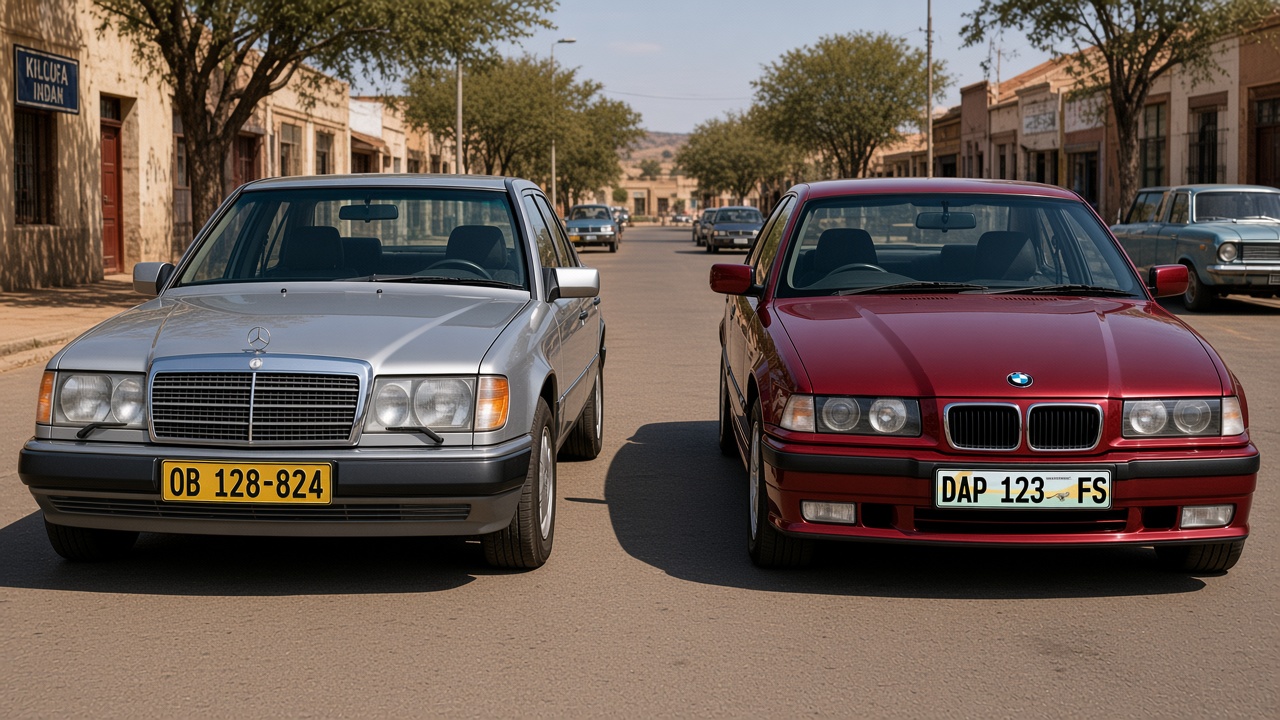
From Bloemfontein’s historic OB 1 registration to the modern 1 FS plate, the story of one of the Free State’s most distinctive number plates is closely connected to the evolution of South Africa’s registration system. A number plate can be little more than a combination of letters and numbers. But some registrations become part of a place’s history.
1 FS is one of the Free State’s most recognisable low-number registrations. It was previously sold for R220,000. Its story sits within a much larger history of South African number plates, from the town-specific system used before 1994 to the provincial systems introduced after South Africa’s democratic transition.
Before 1 FS: The Era of the "OB" Plate
Before South Africa’s modern provincial registration systems were introduced, vehicle registration plates were largely town-specific. In the former Orange Free State, Bloemfontein used the prefix OB. The letters reflected the province and town: O for Orange Free State and B for Bloemfontein.
This meant that registrations seen on Bloemfontein vehicles looked very different from the FS registrations associated with the province today. The older system also gave particular importance to low registration numbers.
1994: The Free State Gets a New Identity
The biggest change came with South Africa’s democratic transition. In 1994, the country’s provincial structure was reorganised and the Orange Free State became the Free State. With this change came a new approach to vehicle registration. The older town-specific prefixes were gradually replaced by a system identifying vehicles with the province.
For the Free State, that meant the emergence of registrations ending in: FS
Instead of identifying a vehicle through a town-specific prefix such as OB, the newer system associated the registration with the province itself. This change created the foundation for the modern FS number plate.
1 FS and the Legacy of OB 1
The history of OB 1 provides an interesting piece of context when considering 1 FS. Under the older system, OB 1 was traditionally associated with the Mayor of Bloemfontein. The modern 1 FS registration belongs to a different registration system and should not automatically be described as a direct replacement for OB 1.
However, both demonstrate the longstanding significance attached to exceptionally low registration numbers in Bloemfontein and the Free State. The change from OB to FS was therefore more than a visual change to a number plate. It reflected a broader transformation in how vehicle registrations represented South Africa’s towns, provinces and administrative structure.
What 1 FS sold for
That significance has also shown up in the price. 1 FS was previously sold for R220,000, far above a standard personalised-plate fee.